
Meghan Markle Partners With AI Fashion Platform OneOff in Australia
Meghan Markle has officially entered the AI sector by partnering with OneOff, an AI-powered fashion discovery platform, during her tour of Australia. The platform utilizes machine learning to provide personalized style recommendations and allows users to follow high-profile celebrities like Markle to instantly identify and purchase their outfits. Markle joins the venture as both a participant and an investor, signaling a strategic shift toward the monetization of celebrity 'data sets.' This partnership matters because it eliminates the friction between viral celebrity moments and consumer transactions, leveraging AI to source direct items or affordable alternatives in real-time. The move has sparked a debate on the commodification of personal style and the role of 'the royal effect' in a data-driven economy. Impacted parties include traditional retailers, fashion influencers, and AI developers seeking to refine visual recognition technology for the luxury market.
Opening Insight
The intersection of celebrity influence and artificial intelligence has reached a definitive turning point. For decades, the "celebrity effect" operated through grainy paparazzi photos and manual scouring of fashion blogs. Today, that friction is being systematically removed.
Meghan Markle’s alignment with the AI-powered fashion platform OneOff during her Australian tour is more than a standard celebrity endorsement. It represents the algorithmic formalization of "the royal effect." By integrating her personal brand into a machine-learning ecosystem, Markle is transitioning from a passive fashion icon to an active participant in the AI-driven attention economy.
This move signals a broader shift in how we consume aesthetics. We are moving away from general trends toward hyper-personalized, data-driven replication. When an AI can instantly identify, source, and suggest alternatives for every garment worn by a public figure, the relationship between the icon and the audience is fundamentally rewired.
What Actually Happened
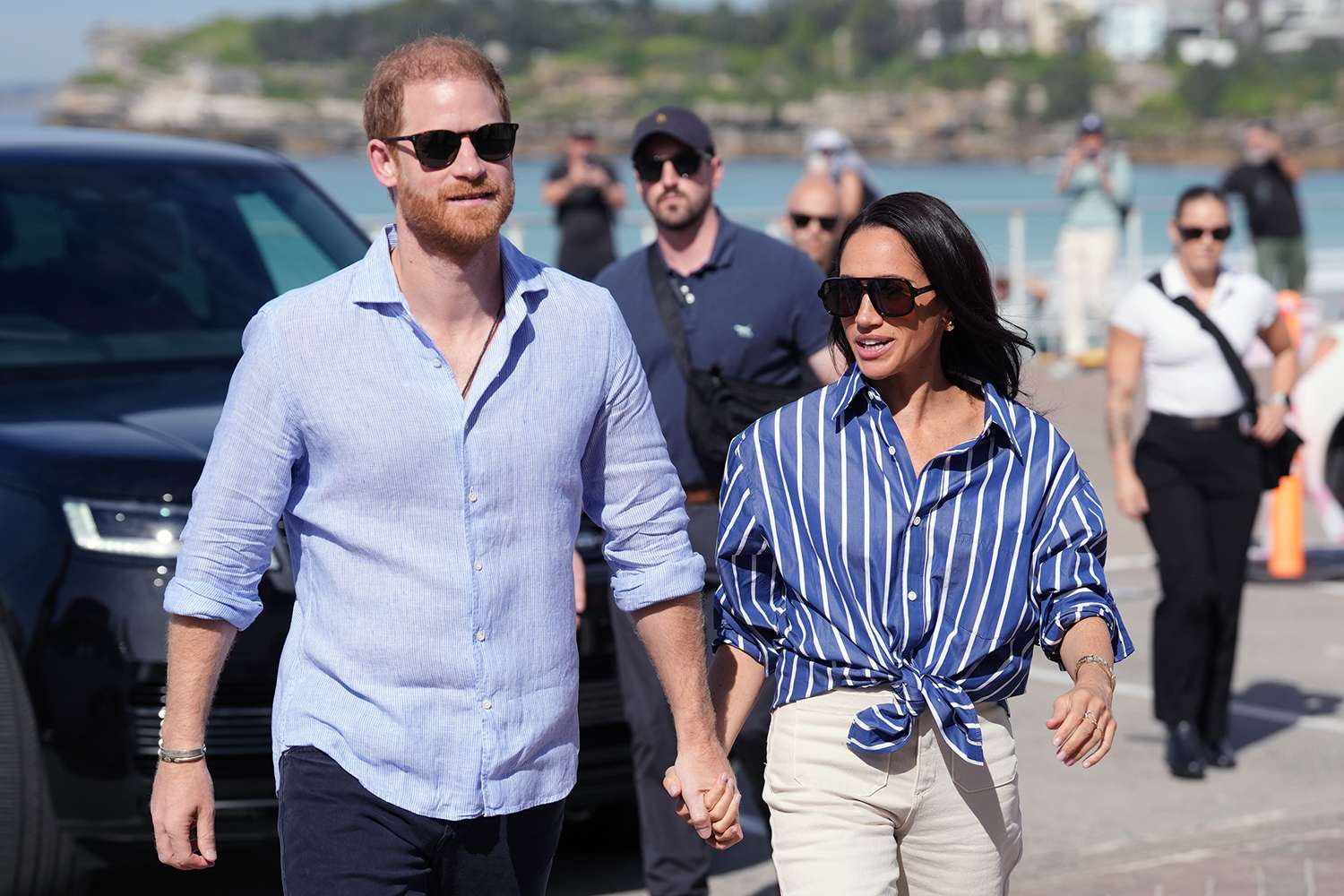
During her high-profile Australian tour alongside Prince Harry, Meghan Markle officially joined the AI fashion discovery startup OneOff as both an investor and a featured participant. The platform is designed to act as a bridge between high-stakes celebrity fashion and the everyday consumer, leveraging advanced machine learning to dismantle the barriers of traditional shopping.
OneOff functions as a personalized recommendation engine. It processes vast amounts of data regarding a user's style history, preferences, and browsing behavior to curate fashion suggestions. The core hook of the platform, however, lies in its "follow" functionality. Users can follow specific style icons—including Markle, Emma Roberts, and Kate Hudson—to gain direct access to their wardrobes.
The AI performs several key tasks within the app. It identifies the specific items worn by these celebrities in real-time or near real-time, finds direct retail links for those items, and, perhaps most importantly, suggests "similar" items across various price points if the original piece is sold out or financially inaccessible. Markle’s involvement gives the platform a significant boost in data points, as her wardrobe choices historically trigger massive spikes in global search and retail demand.
Why It Matters Right Now
The timing of this partnership coincides with an era where "fast fashion" is being replaced by "real-time fashion." In the past, if Meghan Markle wore a specific blazer in Sydney, it might take weeks for retailers to capitalize on the demand or for fans to find affordable alternatives. AI collapses that timeline into seconds.
This matters because it democratizes—or perhaps commodifies—the concept of "the look." For the retail industry, this provides a direct pipeline from a viral moment to a transaction. For the consumer, it removes the "hunt" that previously characterized fashion enthusiasts' experiences.
Furthermore, Markle’s role as an investor indicates a shift in how public figures view their intellectual property. Her "look" is no longer just a byproduct of her public life; it is a data set that can be leveraged, scaled, and monetized through technology. This is the professionalization of the influencer model, backed by the predictive power of artificial intelligence.
Wider Context
The "Meghan Effect" has been a documented economic phenomenon since her engagement to Prince Harry. Small brands have seen their inventories wiped out in minutes after she is photographed wearing a single item. OneOff is essentially an attempt to build a permanent, tech-enabled infrastructure around this phenomenon.
We are seeing a wider trend where AI models are being trained specifically on aesthetic data. Pinterest, Instagram, and various luxury retailers have experimented with visual search, but OneOff’s approach of linking the AI directly to a curated list of high-profile "style leaders" adds a layer of social validation to the algorithmic recommendation.
This also sits within the broader conversation regarding AI and the "human touch." As retail moves toward automation, the industry is searching for ways to keep digital experiences feeling personal. By using a personality like Markle as the "face" of the data, OneOff attempts to humanize the cold efficiency of a recommendation algorithm. It suggests that while the AI is doing the work, the inspiration remains human.
Expert-Level Commentary
From a technical and strategic standpoint, Markle’s entry into the AI fashion space highlights a significant evolution in "intent-based" shopping. Traditional search engines rely on keywords. OneOff relies on visual recognition and social affinity.
The challenge for platforms like OneOff will be the accuracy of the "similarity" algorithms. Fashion is nuanced; a slight change in fabric weight or button placement can move a garment from "timeless" to "cheap." To maintain the trust of a high-value audience, the AI must go beyond basic image recognition and understand the stylistic DNA of the icons it tracks.
There is also the question of data privacy and the feedback loop. As users follow Markle and shop her looks, the AI learns more about the aggregate taste of a global audience. This creates a powerful predictive tool for brands. They are no longer guessing what will be popular next season; they are watching the data accumulate in real-time as users interact with Markle’s digital wardrobe. It is a transition from reactive retail to predictive styling.
Forward Look
The success of this partnership likely paves the way for a more integrated "shoppable life." As AR (Augmented Reality) tech matures, it is not difficult to imagine a scenario where users can not only find Markle’s outfits through an app like OneOff but also virtually "try them on" using a digital twin.
We should also expect more celebrities to move into the "investor-participant" role for AI platforms. Rather than simply being the face of a brand, the future of celebrity endorsement lies in providing the data training sets for specialized AI.
However, the rapid nature of AI-driven replication will likely push luxury brands to innovate faster. If an AI can give the masses a "Markle look" within hours of an appearance, the value of exclusivity may shift. We might see a move toward "un-copyable" fashion—bespoke items designed specifically to confuse or defy AI recognition—to maintain the hierarchy of high fashion.
Closing Insight
The integration of Meghan Markle into the OneOff ecosystem is a signal that the era of the passive icon is over. In the age of AI, influence is measured by how effectively your identity can be translated into actionable data.
By turning her wardrobe into a shoppable algorithm, Markle is embracing the inevitable: the future of fashion is not found in magazines or on runways, but in the seamless, silent calculations of a recommendation engine. As we move forward, the line between who we admire and what we are prompted to buy will continue to blur, until "style" itself becomes a collaborative effort between human inspiration and machine execution.