
OpenAI Introduces Autonomous Workspace Agents for Business Tasks
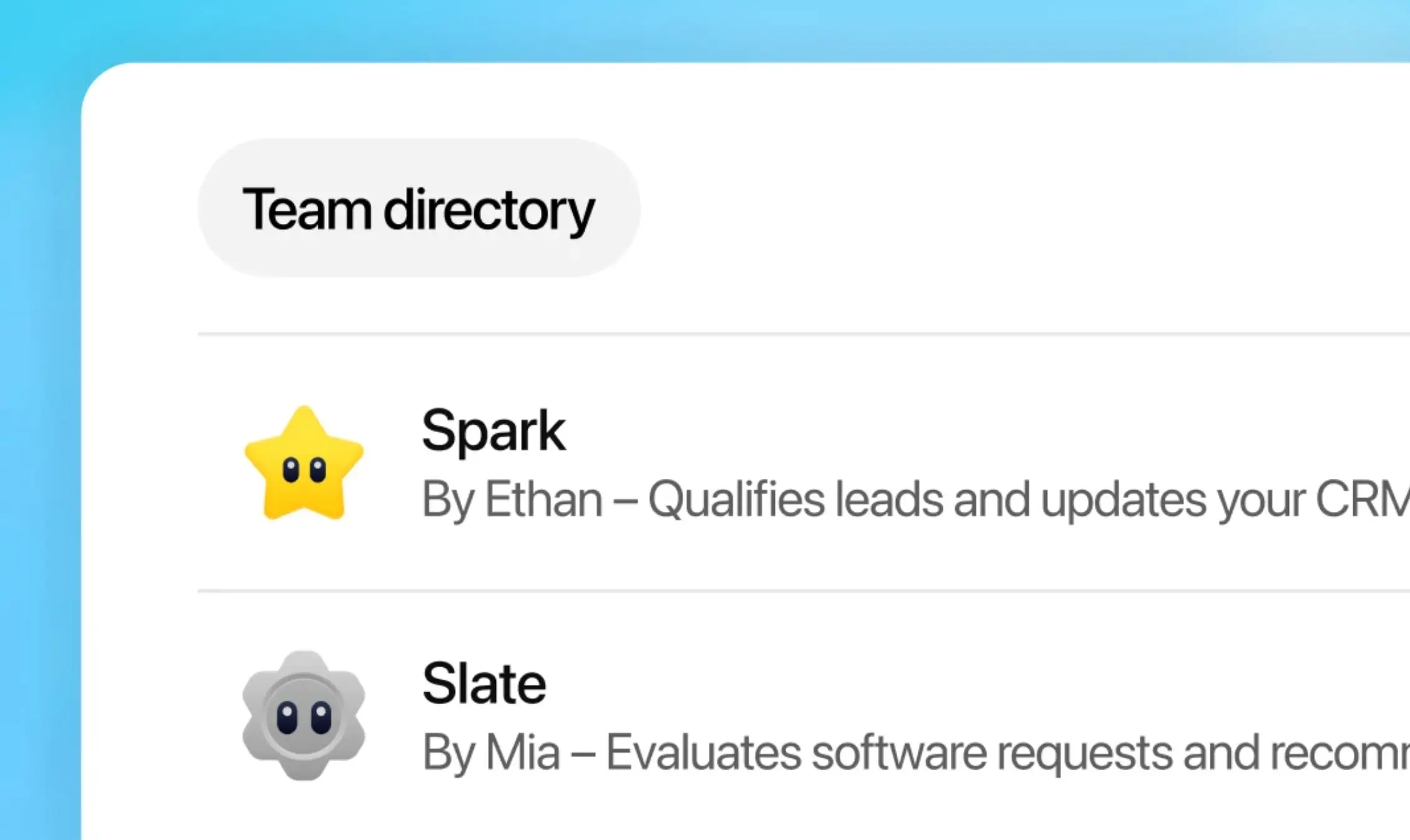
OpenAI has launched autonomous workspace agents for ChatGPT Business, Enterprise, and Education users, moving the platform beyond simple chat into active task execution. These agents can now operate within Slack and Gmail, gathering context from conversations and emails to automate multi-step workflows. While they include "human-in-the-loop" approval mechanisms, these agents are designed to learn and improve over time, directly competing with agentic offerings from Anthropic. The shift marks a critical transition from generative AI (creation) to agentic AI (action). Impacted stakeholders include knowledge workers, IT administrators, and the broader corporate layer currently responsible for administrative "glue work." Early debate focuses on the potential for massive productivity gains versus the risks of algorithmic errors and the displacement of mid-level administrative roles as companies like Meta continue to restructure workforces around AI capabilities.
Opening Insight
The era of the "chat box" is ending. For the last two years, humanity’s primary interaction with artificial intelligence has been conversational—a back-and-forth exchange where the human provides the prompt and the machine provides the prose. We have treated AI as a sophisticated encyclopedia or a tireless ghostwriter.
OpenAI’s introduction of autonomous workspace agents represents a fundamental pivot in the architecture of modern work. We are moving from AI that talks to AI that does. By granting ChatGPT the agency to operate within Slack and Gmail, OpenAI is transitioning the technology from a creative partner to a functional employee.
This is not merely an incremental update to the Custom GPTs launched previously. It is an expansion of the AI’s perimeter. When a machine can gather context across disparate platforms, follow multi-step workflows, and execute tasks without a human "waiting" at the prompt screen, the nature of corporate productivity shifts from manual oversight to intent-based orchestration.
What Actually Happened
OpenAI has officially rolled out workspace agents specifically designed for its Business, Enterprise, and Education tiers. These agents are built to live within the existing digital ecosystems where modern teams already reside—specifically Slack and Google’s Gmail.
The mechanism is more sophisticated than the "if-this-then-that" logic of traditional automation software. These agents are designed to gather context from conversational threads and email chains, synthesize that information, and propose or execute workflows based on high-level goals.
Key features include:
- Contextual Awareness: The ability to scan historical interactions across platforms to understand the nuances of a project.
- Workflow Execution: Moving beyond text generation to perform actions, such as drafting emails in response to Slack inquiries or scheduling follow-ups.
- Approval Loops: Built-in safeguards where the agent requests human authorization before final execution, maintaining a "human-in-the-loop" security posture.
- Iterative Learning: The capability to improve task performance over time based on user feedback and successful outcomes.
This deployment targets the massive middle-management and administrative layer of global enterprises, promising to automate the "glue work" that currently consumes forty percent of the average knowledge worker's day.
Why It Matters Right Now
The timing of this release is a direct response to the intensifying arms race for "Agentic AI." While Large Language Models (LLMs) have reached a point of diminishing returns in terms of pure linguistic fluency, the new frontier is utility.
Anthropic and other competitors have been aggressively positioning their models as tools for direct interaction with computer interfaces. OpenAI's move ensures that ChatGPT remains the central operating system for the enterprise. If your AI cannot "do" the work, it becomes a secondary tool—a place you go to think before you go elsewhere to work. By integrating agents into Slack and Gmail, OpenAI is ensuring that users never have to leave their ecosystem to get things done.
Furthermore, this represents a major monetization strategy for OpenAI's Enterprise tier. As companies look to trim overhead—a trend evidenced by Meta’s recent 10% workforce reductions to pivot toward AI investment—the value proposition of a "digital workforce" becomes irresistible. Companies are no longer asking how AI can help their employees write better; they are asking how many employees an agent can effectively augment or replace.
Wider Context
We are witnessing the death of the siloed application. Historically, software was a tool for a specific task: Excel for numbers, Word for text, Outlook for mail. Agents break these silos. An OpenAI workspace agent perceives the enterprise as a unified data environment, treating a Slack message and a PDF attachment in an email as part of the same cognitive task.
This evolution is grounded in recent research surfacing in academic circles and industry reports. Papers recently published on platforms like ArXiv suggest that "agentic workflows"—where the AI critiques its own work and uses tools—produce significantly higher quality results than "zero-shot" prompting.
However, this shift also introduces significant risks. The move toward autonomous execution brings concerns about "rogue AI" behaviors. While the current workspace agents are restricted to corporate environments, the psychological and structural impact of delegating agency to an algorithm is profound. It challenges our understanding of accountability. If an agent misinterprets a Slack thread and sends an unauthorized email to a client, where does the liability lie?
Expert-Level Commentary
The transition from "Generative AI" to "Agentic AI" is a shift from creative mimicry to operational logic. The intelligence is no longer in the output; it is in the process.
OpenAI’s strategy here is to leverage its massive user base to train these agents in the wild. By deploying them first to Enterprise and Education users, they are testing the agents in high-stakes, data-rich environments. The "approval loop" is not just a safety feature; it is a data collection mechanism. Every time a human clicks "Approve," OpenAI receives a reinforced signal that the agent’s logic was correct.
This creates a feedback loop that will be difficult for smaller competitors to match. Once an agent understands the specific culture, jargon, and workflow of a massive corporation, it becomes "context-locked." The cost of switching to a different AI provider involves not just moving data, but retraining the collective memory of the agents holding the company together.
Forward Look
In the next 12 to 18 months, expect workspace agents to move beyond simple integrations with Slack and Gmail. We will likely see them interacting with CRM systems like Salesforce, project management tools like Jira, and eventually, direct operating system control.
The "Education" tier rollout is particularly telling. As AI agents begin to condense workflows in academic settings, we may see a radical restructuring of how students manage research and administration. This parallels the broader societal shift where AI is already beginning to reshape daily life, from condensing school days to automating the mundane administrative tasks of the modern household.
The debate will soon move from "Will AI take my job?" to "Who is responsible for what my AI did?" We are entering a period of legal and ethical ambiguity regarding autonomous digital actions. As agents become more independent, the "Human-in-the-loop" may become a "Human-on-the-loop," merely supervising a machine-led workforce.
Closing Insight
OpenAI has officially crossed the rubicon from software to staff. By imbuing ChatGPT with the ability to act within the workplace, they have changed the definition of an "application."
In this new reality, productivity is no longer measured by how much a human can output with the help of a tool. It is measured by how effectively a human can manage a fleet of autonomous agents. The value of the worker is shifting from execution to curation.
The machines are no longer just talking to us. They are working for us—and in many cases, working instead of us. The workspace agent is the first true iteration of the digital employee, and its arrival marks the beginning of the end for manual knowledge work as we know it. Individuals and organizations that fail to master the management of these agents will find themselves obsolete not because they couldn't do the work, but because they couldn't orchestrate the machine that does it faster.