
Australia Pivots to 'Trustworthy AI' with New Sector-Specific Hubs
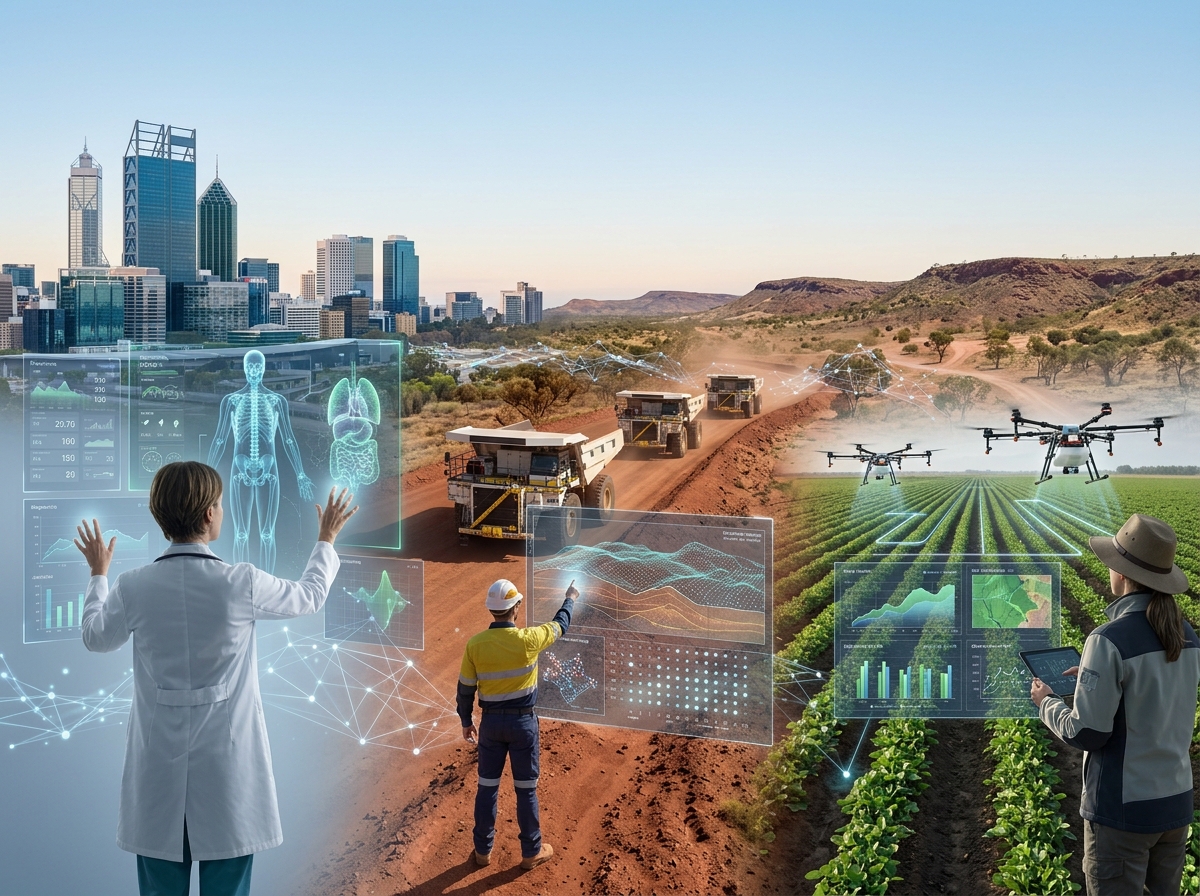
A consortium of leading Australian universities has launched a series of research centres dedicated to 'trustworthy AI' and sector-specific applications in healthcare, mining, and agriculture. This initiative marks a strategic shift from general-purpose AI toward localized, specialized models designed to meet high safety and regulatory standards. The goal is twofold: to develop tools that are transparent and reliable for high-stakes industries and to train an Australian workforce capable of deploying these models safely. The move reflects a broader global trend of prioritizing 'Expert AI' over 'General AI' and aims to ensure Australia's economic sovereignty by reducing reliance on opaque offshore technology. The early debate centers on whether academic institutions can move fast enough to keep pace with the rapid evolution of the technology, but the focus on trust is seen as a necessary move to unlock real-world productivity in sensitive sectors.
Opening Insight
Australia is no longer content to be a passive consumer of Silicon Valley’s black-box algorithms. For years, the global narrative around artificial intelligence has been dominated by general-purpose models—massive, all-encompassing systems designed to write poetry or code with equal mediocrity. However, the true economic and social utility of AI lies in its specificity.
The recent launch of collective university-led research centres across Australia signals a definitive shift in strategy. It is a pivot away from the "move fast and break things" ethos of big tech and toward a "build slow and secure" model tailored to the nation’s core industries. By focusing on "trustworthy AI," these institutions are acknowledging a hard truth: without public and regulatory confidence, the AI revolution will stall before it reaches the hospital ward, the mine site, or the wheat belt.
This is more than an academic exercise. It is a sovereign play to ensure that the infrastructure of the future is compatible with Australian values, legal frameworks, and environmental realities.
What Actually Happened
A consortium of Australia’s leading academic institutions has officially inaugurated several national research hubs. These centres are strategically positioned to bridge the gap between theoretical machine learning and practical, safe application in the real world. The focus is bifurcated into two primary streams: the technical architecture of "trustworthy AI" and the vertical integration of AI into sector-specific domains.
The sectors targeted are not accidental. They represent the backbone of the Australian economy: healthcare, mining, and agriculture. These are high-stakes environments where an error in logic or a hallucination in data isn't just a minor inconvenience; it is a catastrophic risk. A mining automation system cannot afford a "hallucination" regarding topographical data, just as a clinical diagnostic tool cannot be a "black box" to the physicians relying on it.
Beyond software development, these centres are tasked with a human-centric mission: the cultivation of a localized workforce. The goal is to produce a generation of engineers, data scientists, and ethicists who understand how to deploy advanced models within the specific regulatory expectations of the Australian market. This includes adherence to emerging governance standards and the development of tools that are transparent by design.
Why It Matters Right Now
The timing of this launch is critical. Globally, the initial euphoria surrounding generative AI is being replaced by a sober realization of its limitations, particularly regarding safety and reliability. As governments worldwide—including Australia’s—scramble to draft guardrails, the private sector is finding itself in a state of paralysis. Companies want to innovate, but they fear the legal and reputational fallout of an unregulated AI mishap.
These research centres provide a "neutral ground" for innovation. By grounding AI development in the concept of "trustworthiness," Australian universities are creating a gold standard that industry can adopt. This lowers the barrier to entry for domestic firms that might otherwise be intimidated by the complexity of AI implementation.
Furthermore, these initiatives address the "sovereignty gap." Relying solely on offshore models means relying on offshore values and data priorities. By building domain-specific tools for mining and agriculture locally, Australia ensures that its most valuable data remains within its control and that the AI solutions derived from that data are optimized for the unique Australian landscape—be it the specific mineralogy of the Pilbara or the unique climate cycles of the Murray-Darling Basin.
Wider Context
The emergence of these centres must be viewed through the lens of a broader global trend: the move from "General AI" to "Expert AI." While models like GPT-4 are impressive for their breadth, they often lack the depth required for specialized industrial applications. We are seeing a global fracturing of the AI market into specialized niches where accuracy and reliability are non-negotiable.
In the United States and Europe, similar shifts are occurring. However, Australia’s approach is notably collaborative. By forming a university consortium, the nation is pooling its intellectual capital rather than forcing institutions to compete for the same limited pool of local talent. This "team Australia" approach to technology development is becoming a hallmark of how mid-sized economies attempt to punch above their weight in the global tech race.
Economically, this is a defensive move as much as an offensive one. As Paul Krugman and other economists have noted, the productivity gains promised by AI are only possible if the technology is integrated seamlessly into existing workflows. If the tools are too buggy or opaque for industrial use, those productivity gains will never materialize. Australia is placing a bet that trust is the essential ingredient that converts AI potential into GDP growth.
Expert-Level Commentary
The emphasis on "trustworthy AI" is not merely a marketing slogan; it is a technical challenge. To an academic or a high-level developer, trustworthiness encompasses several rigorous metrics: explainability, robustness, privacy-preservation, and fairness.
Explainability is perhaps the most significant hurdle. In healthcare, a model that predicts a patient's risk of heart failure is useless if it cannot explain the why behind its prediction. The new research centres are expected to focus heavily on "XAI" (Explainable AI), which allows human operators to audit the decision-making process of the machine. This moves AI from being a mysterious oracle to a collaborative tool.
Robustness is another pillar. Standard AI models are notoriously fragile when confronted with "out-of-distribution" data—situations they haven't seen before. In the mining and agricultural sectors, environmental conditions are volatile. The research coming out of these Australian centres will likely focus on making AI systems that can handle the "noise" of the real world without breaking down.
There is also the matter of regulatory alignment. These centres aren't just building code; they are building the benchmarks that regulators will eventually use to judge all AI software. By setting the pace now, the university consortium is effectively helping to write the rulebook for the Australian AI industry.
Forward Look
In the next three to five years, we can expect the first wave of "university-certified" AI applications to hit the Australian market. These will likely appear first in the mining sector, where automation is already a mature concept, followed closely by precision agriculture and diagnostic healthcare.
The success of these centres will be measured by their ability to foster a domestic AI ecosystem that doesn't require constant reliance on Silicon Valley. If Australia can successfully train a workforce that can build and maintain these specialized models, the country could become a global exporter of "Trustworthy Industrial AI" systems.
However, challenges remain. The speed of AI development is currently outstripping the speed of academic research and government regulation. There is a risk that by the time these centres produce their first major frameworks, the technological landscape will have shifted again. The consortium must remain agile, avoiding the traditional academic trap of multi-year lead times for results that the market needed yesterday.
Closing Insight
The future of technology is not about who has the biggest model, but who has the most reliable one. Australia’s decision to plant a flag in the territory of trustworthy, sector-specific AI is a calculated move to secure its economic future. By focusing on the hard problems of safety and transparency in industries where they matter most, these research centres are doing the unglamorous but essential work of making AI actually work. Trust, it turns out, is the most valuable commodity in the digital age. Without it, the most advanced algorithm in the world is nothing more than a liability.