
EU and U.S. Advance Joint AI Safety Standards and Testing Regime
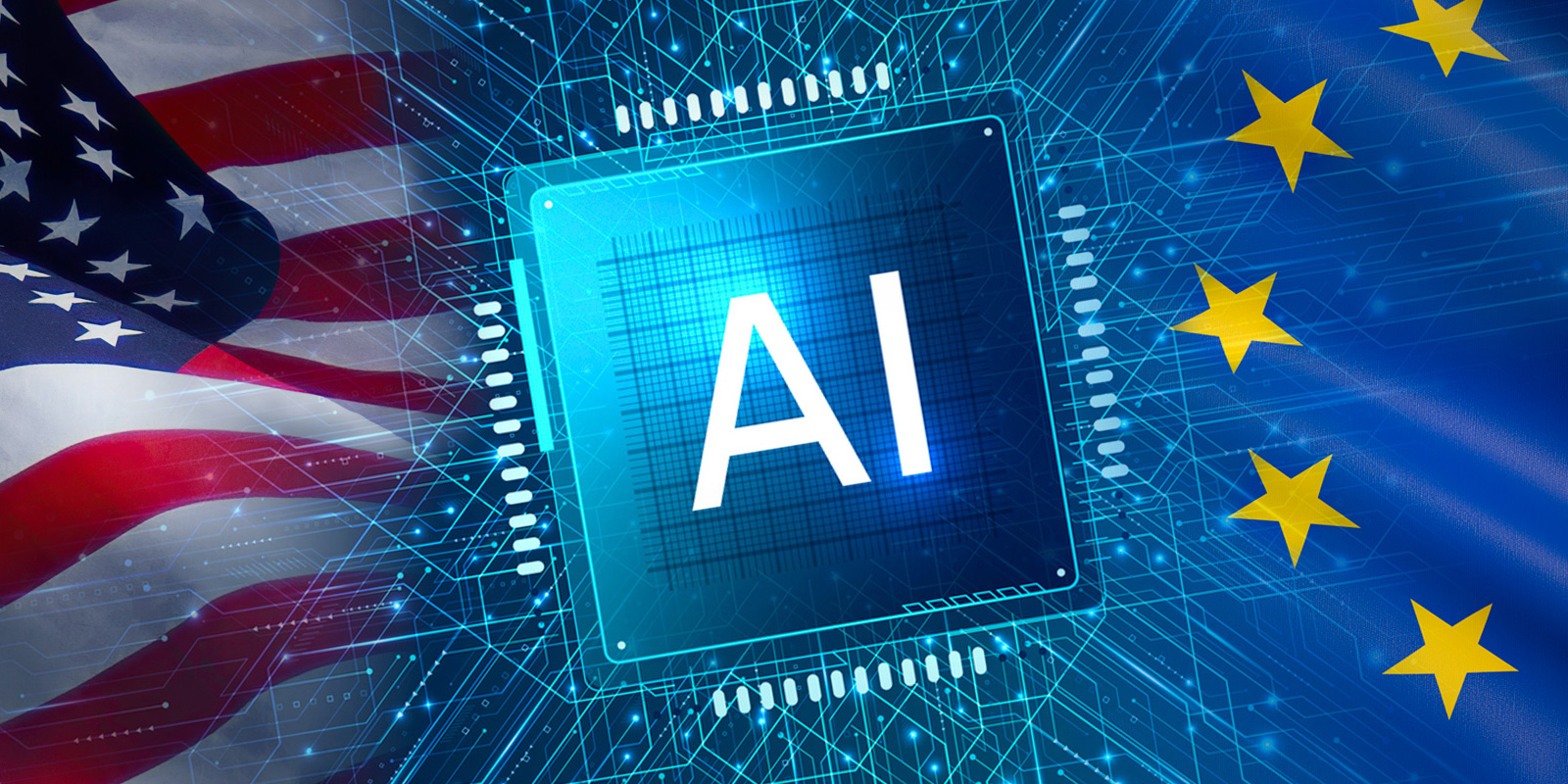
The European Union and the United States have reached a landmark agreement at the Trade and Technology Council (TTC) meeting in Belgium to align their AI safety standards. The initiative focuses on creating joint testing methodologies and shared systemic-risk assessments for "frontier models"—the most powerful AI systems currently in development. By coordinating through their respective AI Safety Institutes, the two regions aim to bridge the gap between the EU AI Act and the U.S. Executive Order on AI. This move is designed to provide regulatory clarity for tech giants, prevent a "race to the bottom" regarding safety, and establish a unified Western front in the global race for AI governance. While the political alignment is a significant step, technical challenges remain in defining objective metrics for safety and ensuring that these standards do not inadvertently stifle open-source innovation or favor entrenched industry leaders.
Opening Insight
The geopolitical landscape of artificial intelligence is shifting from a race for dominance to a cooperative scramble for control. For years, the narrative surrounding AI has been one of divergence: the European Union’s rigid, rights-based regulatory framework versus the United States’ market-led, innovation-first approach. That gap is closing, not by accident, but by necessity.
At the latest EU–U.S. Trade and Technology Council (TTC) meeting in Belgium, a fundamental pivot occurred. The two most powerful economic blocs in the Western world have realized that if they cannot agree on what constitutes a "safe" AI model, the global standard will be dictated by chaos or by adversarial actors. The announcement of a shared approach to AI safety evaluation is more than a bureaucratic milestone; it is the first blueprint for a Western "AI Border Control."
By aligning technical standards and testing methodologies for frontier models, the EU and U.S. are attempting to build a unified defensive perimeter. They are acknowledging that the risks posed by systemic AI—from biosecurity threats to the erosion of democratic discourse—do not respect national sovereignty. This is the birth of a common language for the machine age.
What Actually Happened
During the TTC ministerial meeting held in Leuven, Belgium, officials from the European Commission and the U.S. government formalized a commitment to coordinate on AI safety. The core of the agreement focuses on the creation of common testing methodologies for "frontier models"—the highly capable, large-scale AI systems that sit at the cutting edge of the industry.
This initiative follows the passage of the EU AI Act and the Biden administration’s Executive Order on the Safe, Secure, and Trustworthy Development and Use of Artificial Intelligence. While these domestic policies remain distinct, the TTC agreement seeks to bridge the technical gap between them. Specifically, the two regions will work through their respective AI Safety Institutes—recently established in both the U.S. and the EU—to share information and develop joint "benchmarks" for risk.
The discussions outlined a three-pronged approach. First, the development of objective metrics to measure model performance and potential for harm. Second, the coordination of systemic-risk assessments, particularly for models that could be used to facilitate cyberattacks or develop biological weapons. Third, a commitment to transparency, ensuring that developers of the most powerful systems are subject to standardized reporting requirements on both sides of the Atlantic.
The meeting also touched on the broader technological ecosystem, including the secure supply of semiconductors and the promotion of 6G standards. However, the alignment on AI safety took center stage, signaling a desire to move beyond high-level principles toward actionable technical oversight.
Why It Matters Right Now
The timing of this alignment is critical. We are currently in the "wild west" phase of large language model (LLM) deployment. Companies are releasing models with capabilities that even their creators do not fully understand. Without a unified testing regime, a model deemed too dangerous for release in Brussels could simply be launched out of Delaware, or vice-versa, creating a regulatory race to the bottom.
Furthermore, the concept of "systemic risk" is no longer theoretical. As AI becomes embedded in critical infrastructure—from energy grids to financial markets—the failure of a single frontier model could have cascading effects throughout the global economy. By aligning their assessment methodologies now, the EU and U.S. are attempting to prevent a "Black Swan" event before it occurs.
This matters for the private sector because it provides a glimmer of regulatory certainty. For companies like OpenAI, Google, and Anthropic, the prospect of navigating two entirely different sets of safety tests was a looming nightmare. A shared standard reduces the cost of compliance and allows for a more streamlined path to international deployment. For the public, it represents the first serious attempt by democratic governments to verify the marketing claims of "safety" made by the tech giants.
Wider Context
To understand the weight of this agreement, one must look at the recent trajectories of both regions. The EU has historically led on regulation, with the AI Act serving as the world’s first comprehensive legal framework for artificial intelligence. Its approach is risk-based, categorizing AI uses and demanding strict transparency for high-risk applications.
The U.S., meanwhile, has relied heavily on voluntary commitments from major tech firms and executive actions. The Biden administration’s Executive Order was a significant step toward a more hands-on approach, invoking the Defense Production Act to require safety test results from developers. By merging these two philosophies, the TTC is creating a "Goldilocks" zone: rigorous enough to satisfy European concerns about human rights, yet flexible enough to accommodate the American drive for technological leadership.
There is also a significant geopolitical dimension. The U.S. and EU are essentially forming an "AI bloc." This coordination is a deliberate signal to other global powers, particularly China, that the democratic world intends to set the global rules for AI governance. If the U.S. and EU can agree on what a "safe" model looks like, those standards will likely become the de facto global requirement for any company wishing to operate in the world’s most lucrative markets.
Expert-Level Commentary
The primary challenge moving forward is not political will, but technical feasibility. Developing a "common testing methodology" is extraordinarily difficult. AI models are not static; they are "black boxes" that evolve through fine-tuning and interaction. Testing a model for safety on Tuesday does not guarantee it remains safe on Wednesday.
Experts in the field are closely watching the interplay between the U.S. AI Safety Institute (NIST) and the EU AI Office. These bodies will be responsible for the "technical heavy lifting." The rub lies in the definition of "frontier." If the threshold for a frontier model is set too high, many risky systems will fly under the radar. If it is set too low, it could stifle the open-source movement and smaller startups that lack the resources for rigorous testing.
There is also the question of "capture." Critics argue that by involving tech giants in the development of these testing standards, the U.S. and EU risk allowing the industry to grade its own homework. While the TCC communique emphasizes independent oversight, the reality is that the government often lags behind the private sector in terms of compute power and specialized talent. The success of this joint regime depends entirely on whether the newly formed AI Safety Institutes can attract the caliber of researchers necessary to challenge the industry’s assertions.
Forward Look
In the coming months, we should expect to see the first "joint test suites" released for public comment. These will be the actual protocols—the red-teaming exercises and stress tests—that frontier models must pass. The outcome of these tests will likely determine whether future versions of models like GPT-5 or Gemini 2 are granted a "license to operate" across the Atlantic.
We should also anticipate a push to expand this framework to the G7 or an even broader coalition. The U.S. and EU are the anchor, but for this to truly work as a global standard, it will need buy-in from Japan, Canada, and the UK.
A major point of friction to watch is the treatment of open-source AI. The U.S. has shown a traditional openness to the open-source community, viewing it as a driver of innovation. Some factions within the EU, however, view powerful open-source models as a bypass for safety regulations, as they can be modified by anyone without centralized oversight. How the joint testing regime handles the decentralized nature of open-source will be a bellwether for the future of the technology.
Closing Insight
The agreement reached in Belgium marks the end of the "hands-off" era for artificial intelligence. The EU and U.S. have effectively declared that frontier AI is too influential and too potentially volatile to be left to the discretion of private corporations alone.
By choosing to align their standards, these two powers are attempting to build a regulatory moat around the Western AI ecosystem. Innovation will continue, but it will now be conducted under a shared microscope. The message to the tech industry is clear: the price of building the world’s most powerful tools is the acceptance of the world’s most rigorous scrutiny. The era of "move fast and break things" is being replaced by the era of "test first and verify together." It is a necessary evolution, but one that will test the agility of both the regulators and the regulated.