
The Silicon State: U.S. Agencies Reveal Hundreds of Active AI Systems
For the first time, U.S. federal agencies have publicly disclosed comprehensive inventories of the artificial intelligence systems they currently utilize, fulfilling a key mandate from the Biden administration’s landmark AI executive order. These reports reveal hundreds of AI applications across major departments, including the Department of Homeland Security and the Department of Justice. The identified systems are being used for high-stakes decisions such as benefits eligibility, fraud detection, and immigration screening. This transparency move triggers mandatory risk-management and civil-rights reviews for systems deemed 'high-impact.' While hailed by transparency advocates as a necessary step for algorithmic accountability, the disclosures also raise urgent questions about the potential for automated bias, the reliance on private-sector contractors, and the lack of clear pathways for citizens to appeal AI-driven decisions. The early debate focuses on whether agencies will properly self-classify their most sensitive tools as high-risk, or seek to avoid oversight through administrative loopholes.
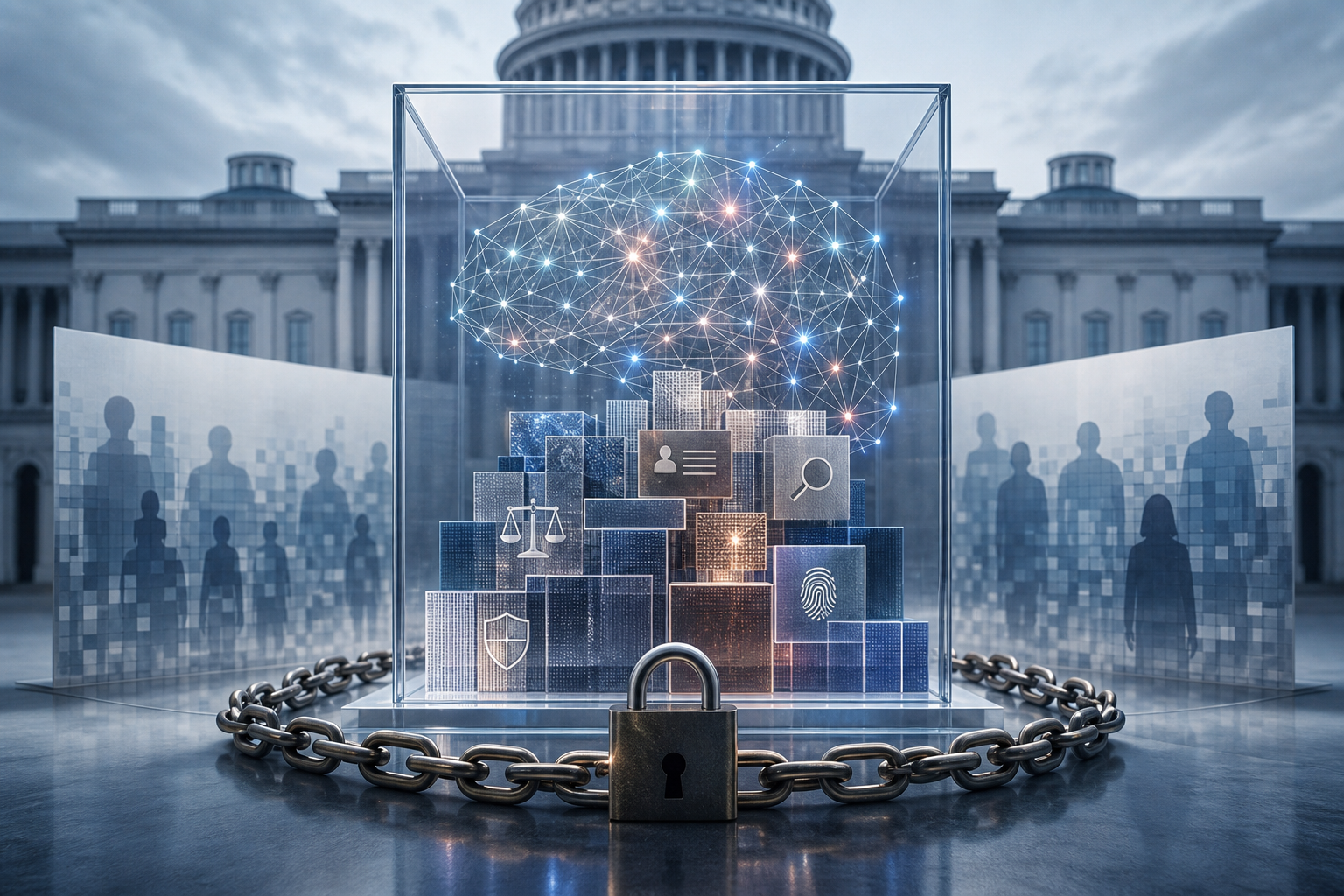
Opening Insight
The black box of government operations has long been a source of both mystery and apprehension. For decades, the public has understood that federal agencies use "algorithms" to streamline bureaucracy, but the specifics of those systems—where they are used, who built them, and how they impact individual lives—remained largely occluded by national security concerns or simple administrative inertia.
This month, that veil was partially lifted. In a landmark step toward algorithmic accountability, U.S. federal agencies have released their first comprehensive inventories of artificial intelligence systems. This is not merely a bureaucratic exercise in cataloging software; it is the first formal map of the silicon infrastructure that governs the American administrative state.
By listing hundreds of active AI systems, the U.S. government has admitted that AI is no longer a "future-state" technology. It is a current, operational reality integrated into the core functions of the Department of State, the Department of Justice, and the Department of Homeland Security. The disclosure marks the transition from theoretical AI ethics to practical, public governance.
What Actually Happened
Following the mandates set forth in President Biden’s Executive Order on the Safe, Secure, and Trustworthy Development and Use of Artificial Intelligence, multiple federal departments have published public-facing inventories of their AI usage. This represents the first wave of a transparency push designed to bring federal technology into alignment with emerging civil rights and safety standards.
These inventories are surprisingly granular. They detail hundreds of specific applications ranging from the mundane to the highly sensitive. The reports show that AI is being deployed to handle massive datasets that were previously unmanageable by human staff alone.
Key areas identified in the disclosures include:
- Benefits Eligibility: Systems used to determine who qualifies for federal programs.
- Fraud Detection: Algorithms designed to flag suspicious financial activity and improper payments across social services.
- Immigration Screening: AI-driven tools used at borders and in visa processing to evaluate risks and verify identities.
- Environmental Monitoring: Software that analyzes satellite imagery and sensor data to track climate shifts and pollution levels.
The release of these inventories triggers a secondary, more rigorous phase of the Executive Order: high-impact systems—those that could affect civil liberties, safety, or privacy—must now undergo formal risk-management and civil-rights reviews. Agencies are now required to prove these tools do not inadvertently discriminate or produce biased outcomes.
Why It Matters Right Now
The timing of this disclosure is critical. We are currently in a period of intense public skepticism regarding the "hallucinations" and biases of Large Language Models (LLMs). By revealing the extent of federal AI reliance, the government is forcing a public debate on the trade-off between administrative efficiency and individual rights.
When an AI system determines the eligibility for healthcare benefits or flags a citizen for tax fraud, the stakes are not academic. They are material. Until these inventories were published, citizens and advocacy groups lacked the basic vocabulary needed to challenge these systems. You cannot audit what you cannot find.
Furthermore, these reports highlight a massive reliance on third-party contractors. The inventories reveal that the federal government is effectively a consumer of private AI technology, often relying on proprietary code that is not subject to the same transparency as public-sector records. This creates a "transparency gap" where the government uses tools it does not fully own or, in some cases, fully understand.
The move also signals to the global community that the U.S. is attempting to lead on AI safety through procedural transparency rather than just restrictive legislation. It sets a precedent for how a democratic superpower manages the integration of powerful, autonomous tools into the machinery of state.
Wider Context
The publication of these inventories does not happen in a vacuum. It is part of a broader global push to define the "red lines" of AI deployment. The European Union’s AI Act has already established a risk-based framework that classifies systems by their potential for harm. The U.S. approach, spearheaded by this Executive Order, mimics that risk-based logic but focuses heavily on the accountability of federal agencies themselves.
Historically, the U.S. government has struggled to keep pace with technological shifts. The "legacy system" problem—where agencies rely on code from the 1970s and 80s—is well-documented. However, these inventories show a surprising leapfrog effect. Instead of slowly modernizing, many agencies have jumped straight into AI-integrated workflows.
This rapid adoption has outpaced the development of legal frameworks. Currently, there is a patchwork of guidance, but no unified federal law that dictates how a citizen can appeal a decision made by an AI. The inventories provide the evidentiary basis that will likely be used in future litigation to argue for more robust due process protections in an AI-driven world.
Expert-Level Commentary
The inventories disclose the what, but they are remarkably silent on the how. While we now know that immigration screening uses AI, we still lack a clear view of the training data or the weighting mechanisms that lead to a "flag" on a specific individual.
Policy analysts have noted that the "high-impact" designation is the battleground for the next twelve months. Agencies are essentially being asked to self-report their level of risk. There is a clear incentive for agencies to categorize systems as "low-risk" to avoid the burdensome oversight and civil rights reviews mandated for "high-impact" tools.
The involvement of the Department of Justice and the Department of Homeland Security is particularly significant. These agencies wield the most coercive power of the state. If their AI systems are found to have even a 1% bias against a specific demographic, the cumulative effect across millions of screenings is catastrophic for social equity.
There is also the question of "Technical Debt." By integrating complex AI systems into federal workflows today, the government may be locking itself into specific vendor ecosystems for decades. If a private AI company goes bankrupt or pivots its technology, the federal systems built atop that technology could become unmaintainable or "black boxes" that no one inside the government knows how to fix.
Forward Look
The next six to twelve months will see a surge in "Algorithmic Impact Assessments." Now that the inventory is public, civil rights groups and government watchdogs will likely use the Freedom of Information Act (FOIA) to dive deeper into the specific systems listed.
We should expect:
- Legal Challenges: Lawsuits specifically targeting AI-driven benefits denials or border screenings based on the data provided in these inventories.
- Standardization of Audits: The NIST (National Institute of Standards and Technology) will likely play a larger role in defining what a "successful" civil rights review looks like for a federal AI system.
- Budgetary Adjustments: As the cost of maintaining and auditing these systems becomes clear, we may see specific line items in federal budgets dedicated solely to "AI Governance" and "Safety Compliance."
There is also the possibility of a "Transparency Backlash." If these disclosures lead to significant public outcry or stalled operations due to litigation, future administrations may attempt to reclassify many of these systems under national security exemptions to avoid public scrutiny.
Closing Insight
The publication of these AI inventories marks the end of the "Wild West" era of federal technology. By acknowledging the presence of these systems, the U.S. government has accepted that its use of technology is a matter of public record and public interest.
The real test, however, is not the listing of the systems, but the willingness to decommission them if they are found to be flawed. Transparency is a hollow victory if it is not followed by accountability. As these digital mirrors are held up to the federal bureaucracy, we will finally see whether the "efficiency" promised by AI is worth the potential cost to the democratic principles of fairness and oversight. High-speed governance is only a virtue if it is moving in the right direction.