
The End of Forgetting: How Life Data AI is Cannibalizing the Unrecorded Moment
The transition from intentional data entry to passive, total life ingestion is here. As AI begins to record and index every conversation we have, the human experience of forgetting—a vital biological and social function—is being systematically erased. This piece explores the emergence of 'Life Data' and the cognitive prosthetics that offer us total recall at the cost of intellectual privacy and social grace. While the productivity gains are immense, the shift toward a searchable, timestamped existence threatens the very nature of authentic human connection and creates new legal vulnerabilities. We are moving toward a future where our 'Shadow Self' knows us better than we know ourselves, forcing a confrontation with the value of our own fading memories.
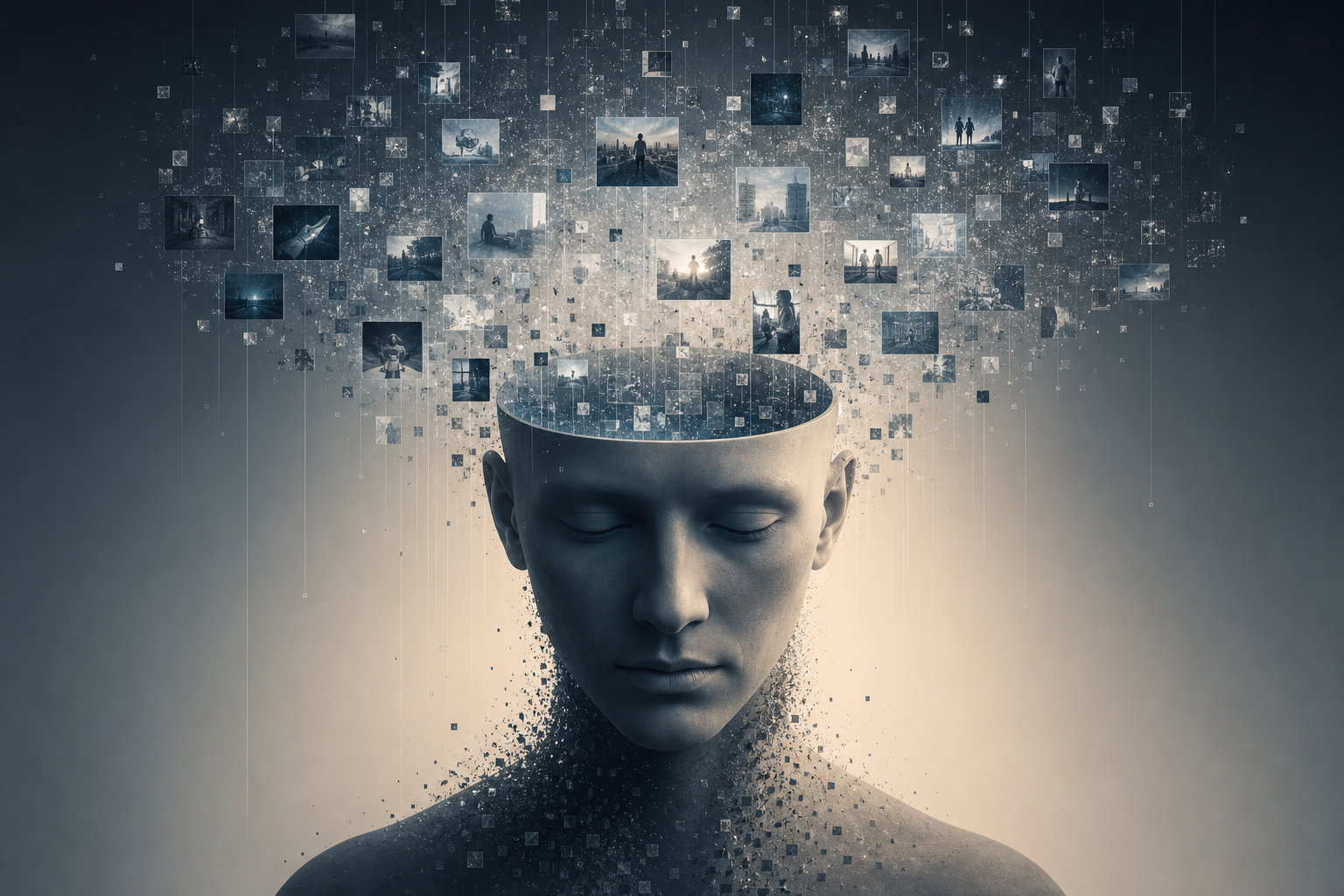
The era of the unrecorded life is ending, and with it, the sanctuary of the forgotten word. As wearable hardware like the Limitless pendant and Ray-Ban Meta glasses begin to capture the ambient audio of our existence, we are transitioning from an age of intentional search to an age of total recall. This shift toward Life Data—the comprehensive ingestion of every conversation, meeting, and casual aside into a personalized large language model—represents the most profound transformation of human cognition since the invention of the written word. We are no longer just using AI to write emails or generate images; we are outsourcing our personal histories to silicon, creating a digital twin that remembers what we have inevitably evolved to forget.
The technical infrastructure for this transition is already in place. Modern speech-to-text models have reached a level of fidelity where background noise and overlapping voices are no longer insurmountable hurdles. When these transcripts are fed into vector databases, they create a searchable, semantic map of a person’s entire social and professional life. This is not merely about productivity or finding that one specific quote from a meeting three weeks ago. It is about the emergence of a cognitive prosthetic that eliminates the friction of human fallibility. If you can query your own life with the same ease that you query Google, the nature of expertise and interpersonal accountability changes overnight. You become a person who never misses a detail, never forgets a promise, and never loses the thread of a complex narrative.
However, the cost of this total recall is the systematic erosion of the "right to be forgotten" in private life. The psychological concept of the "forgetting curve," pioneered by Hermann Ebbinghaus, suggests that forgetting is a necessary biological function that allows the brain to prioritize relevant information and heal from social friction. When every offhand comment or poorly phrased argument is preserved in high-fidelity text, the social grace of forgiveness becomes harder to maintain. We are entering a world where "I didn't mean it that way" can be debunked by a timestamped transcript. The legal and ethical implications are staggering. If your AI has recorded every conversation you’ve had for a year, that data becomes the ultimate subpoena target, turning your own memory into a witness against you.
The End of Intellectual Privacy
The most provocative shift occurs when these personal data silos are used to train local models that mimic our specific rhetorical styles and belief systems. This creates a "Shadow Self"—an AI that can predict your responses, draft your messages, and even simulate your presence in meetings you didn't attend. While this offers a massive leap in efficiency, it also introduces a terrifying degree of susceptibility. If a third-party algorithm understands the nuances of your conversational history better than you do, it can nudge your decision-making processes with surgical precision. We are trading the messy, private sanctity of our inner monologues for a highly optimized, externally hosted version of ourselves.
This is not a distant sci-fi trope; it is a burgeoning market. Companies are already positioning these devices as "memory augmenters" for the aging or as "executive assistants" for the hyper-ambitious. But we must ask what happens to the quality of human presence when we know we are being perpetually indexed. Authentic connection relies on the ephemeral nature of the moment. If every interaction is an entry in a database, we may find ourselves performing for the record rather than speaking to the person in front of us. The "observer effect" in physics suggests that the act of observation changes the phenomenon being observed; in the context of Life Data, the act of recording changes the very nature of human sincerity.
The Horizon of the Quantified Soul
We will know this reality has fully integrated into the fabric of society when we see the first high-profile legal ruling where a "Personal Life Archive" is admitted as primary evidence in a non-criminal civil suit, such as a divorce or a workplace harassment claim, setting a precedent that private ambient recordings are no longer shielded by social convention. This will be the signal that the era of "off the record" has officially vanished from the human experience. As we stand on this threshold, we face a fundamental choice about the architecture of our own minds. We must decide if the benefits of an infallible digital memory outweigh the loss of our biological right to be misunderstood, to change our minds, and to let the past fade into the merciful obscurity of time. The strategic dilemma for every professional today is not whether they will use these tools, but whether they are prepared to live in a world where their past self is an inescapable, searchable, and legally binding ghost that follows them into every future interaction.
Discussion
Be the first to react.