
Australia Proposes Ending the Era of AI Self-Regulation
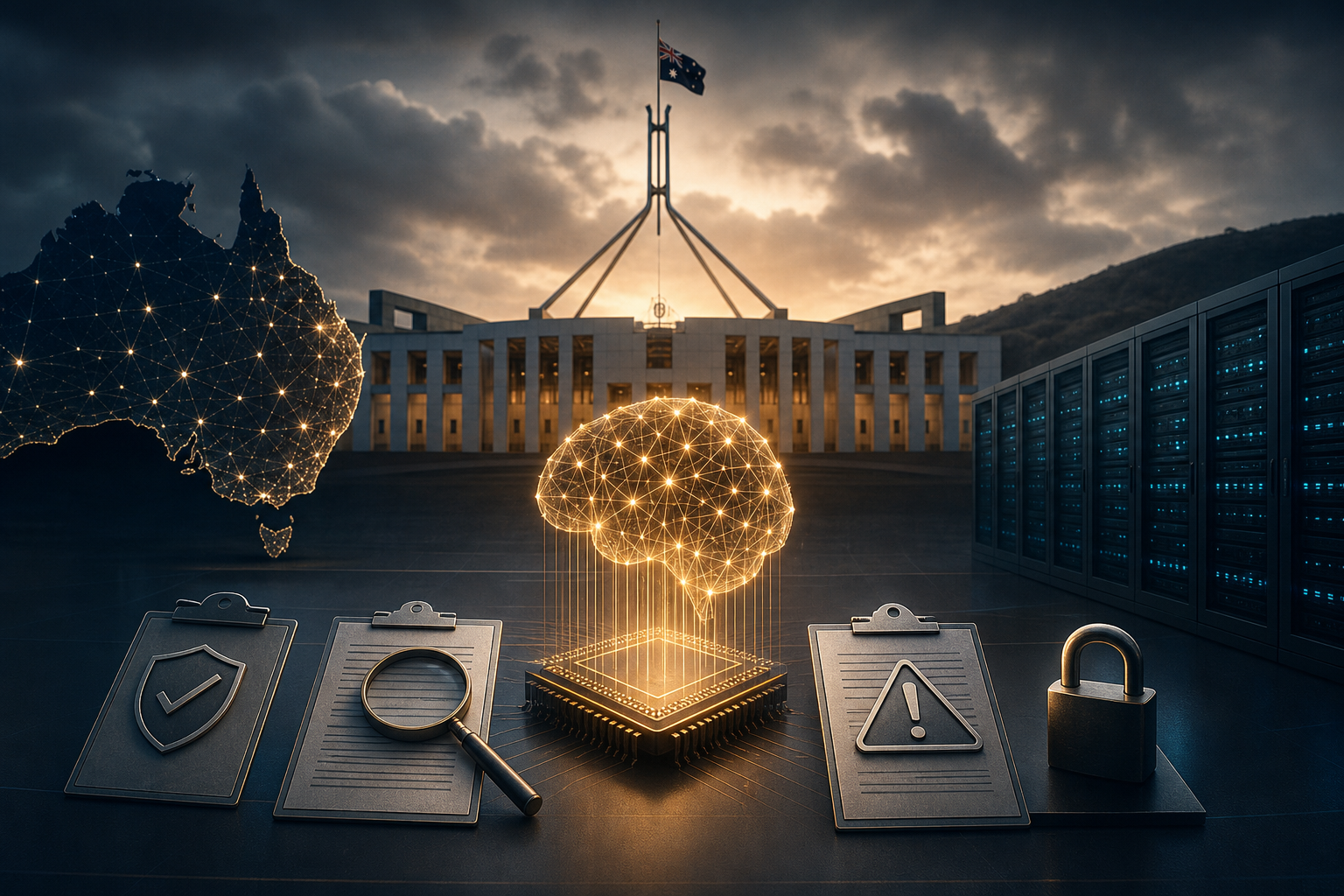
An Australian parliamentary committee has issued a series of landmark recommendations aimed at regulating frontier AI companies. The proposal calls for mandatory independent safety assessments, a formal incident reporting framework for AI harms, and a requirement for developers to grant government security agencies early access to new models. Crucially, the committee also advocated for the development of domestic sovereign computing capacity to reduce Australia's reliance on foreign infrastructure. This move represents a significant shift from voluntary corporate commitments toward a legally enforceable safety regime. While the recommendations aim to mitigate risks such as misinformation and infrastructure vulnerability, they also spark debate over potential stifling of innovation and the feasibility of domestic hardware independence. Impacted stakeholders include multinational tech giants, local AI startups, and national security agencies, all of whom face a new landscape where government oversight precedes market entry.
Opening Insight
The era of artificial intelligence moving through the global economy as an unregulated "wild west" is nearing its end in the Southern Hemisphere. Australia is signaling a definitive shift from passive observation to active oversight.
A landmark recommendation by a joint parliamentary committee has laid out a blueprint that would effectively strip frontier AI companies of their ability to self-regulate. By calling for mandatory independent safety assessments and forced transparency, the Australian government is positioning itself as a rigorous gatekeeper rather than a mere consumer of Silicon Valley’s exports.
This is not just about technical guardrails. It is a fundamental reassertion of state sovereignty over algorithms that increasingly dictate the flow of information, the security of infrastructure, and the integrity of democratic processes. Australia is betting that by imposing friction today, it can prevent a catastrophic failure of trust tomorrow.
What Actually Happened
The Australian Joint Committee on Statutory Oversight of the National Anti-Corruption Commission—tasked with investigating the implications of AI—has released a comprehensive set of recommendations aimed at curbing the unchecked power of "frontier" AI developers.
The centerpiece of the report is a call for mandatory independent safety assessments. Unlike the voluntary commitments currently seen in the United States and parts of Europe, these assessments would be legally required. They would involve third-party audits of high-risk models before they are deployed to the public.
Furthermore, the committee has recommended a formal incident reporting framework. Similar to the aviation or automotive industries, AI companies would be legally obligated to report "near misses" or harmful outputs to a regulatory body. This would be paired with a requirement to grant independent experts and government security agencies early access to new models developed within Australia.
Crucially, the committee highlighted a glaring vulnerability: Australia’s reliance on foreign computing infrastructure. To mitigate this, they recommended the development of domestic sovereign computing capacity, ensuring that the nation's AI future is not entirely dependent on the whims of American or Chinese cloud providers.
Why It Matters Right Now
The timing of these recommendations is critical. We are currently witnessing a global race toward "General Purpose AI," where models are increasingly capable of performing tasks that range from coding software to synthesizing biological data. The window to establish a regulatory baseline is closing.
If the Australian government adopts these recommendations, it sets a global precedent. It moves the conversation from "what might go wrong" to "who is legally responsible when it does." For businesses, this means the cost of compliance is about to rise. For the public, it offers a glimmer of hope that the technology being integrated into their lives has been vetted by someone other than the person selling it.
This also touches on national security. By demanding early access for security agencies, Australia is acknowledging that AI is no longer just a productivity tool—it is a dual-use technology with significant military and intelligence implications. Waiting until a model is public to assess its risks is increasingly viewed by policymakers as a strategic failure.
Wider Context
Australia’s move comes at a time of heightened global tension regarding AI sovereignty and copyright. While the committee focuses on safety, parallel discussions are occurring regarding how AI models are trained. Recent reporting suggests a potential green light for changes to copyright law that would favor local AI training, attempting to balance the needs of creators with the necessity of a homegrown tech sector.
This push for regulation is also a response to the dominance of a few hyper-scale corporations. Companies like ByteDance, the parent of TikTok, have recently signaled scientific breakthroughs in AI that could redefine industry standards. In this environment, medium-sized economies like Australia fear being left as "vassal states" to the tech giants, possessing the data but none of the control or the infrastructure to process it.
The push for domestic computing capacity is a direct result of this anxiety. Without sovereign chips and data centers, Australia’s ability to enforce its own safety standards remains theoretical. If the hardware is offshore, the jurisdiction is diluted.
Expert-Level Commentary
The shift toward mandatory assessments reflects a growing skepticism among policy experts regarding "red teaming" as a voluntary corporate exercise. In the current model, companies hire their own testers to find flaws. The committee’s recommendation for independent expert access suggests that the current self-policing model is viewed as insufficient for the scale of risk involved.
There is also the matter of the "black box" problem. As models become more complex, even their creators struggle to explain why a specific output was generated. By mandating incident reporting, Australia is attempting to build a library of failure modes. This empirical approach to AI safety is a departure from the philosophical debates that have dominated the sector for the last two years.
However, a tension remains. Critics of heavy regulation argue that mandatory safety checks could slow down innovation, potentially driving talent and capital to more permissive jurisdictions. The committee’s call for sovereign computing is the counter-argument to this: by building the infrastructure locally, Australia hopes to create a "safe harbor" for AI development where safety and innovation are not mutually exclusive.
Forward Look
The path from recommendation to legislation is rarely smooth. The Australian government must now decide how much of this report to codify into law. We can expect significant lobbying from multinational tech firms who will argue that mandatory audits infringe on intellectual property and trade secrets.
In the near term, we will likely see the establishment of a specialized AI safety office or a dedicated regulator within an existing department. This body will be tasked with defining what constitutes a "frontier model"—a definition that will be fiercely contested, as it determines which companies fall under the new, stricter rules.
Longer term, if Australia successfully builds sovereign computing capacity, it could become a regional hub for "ethical AI." By providing the hardware and a clear, stable regulatory framework, it may attract developers who are wary of the legal uncertainty in the US or the rigid, top-down directives in the EU.
Closing Insight
The recommendation for independent safety checks marks the end of the "move fast and break things" era for AI in Australia. It signals a transition into a more mature, albeit more bureaucratic, phase of technological integration.
The core message from the parliamentary committee is clear: trust is a poor basis for national policy. In the high-stakes world of frontier AI, the Australian government is choosing to verify. Whether this leads to a safer digital environment or a stifled innovation landscape depends entirely on the precision of the forthcoming regulations. For now, the signal has been sent—the era of the unvetted algorithm is over.