
Meta to Build Massive First Canadian Data Center in Central Alberta
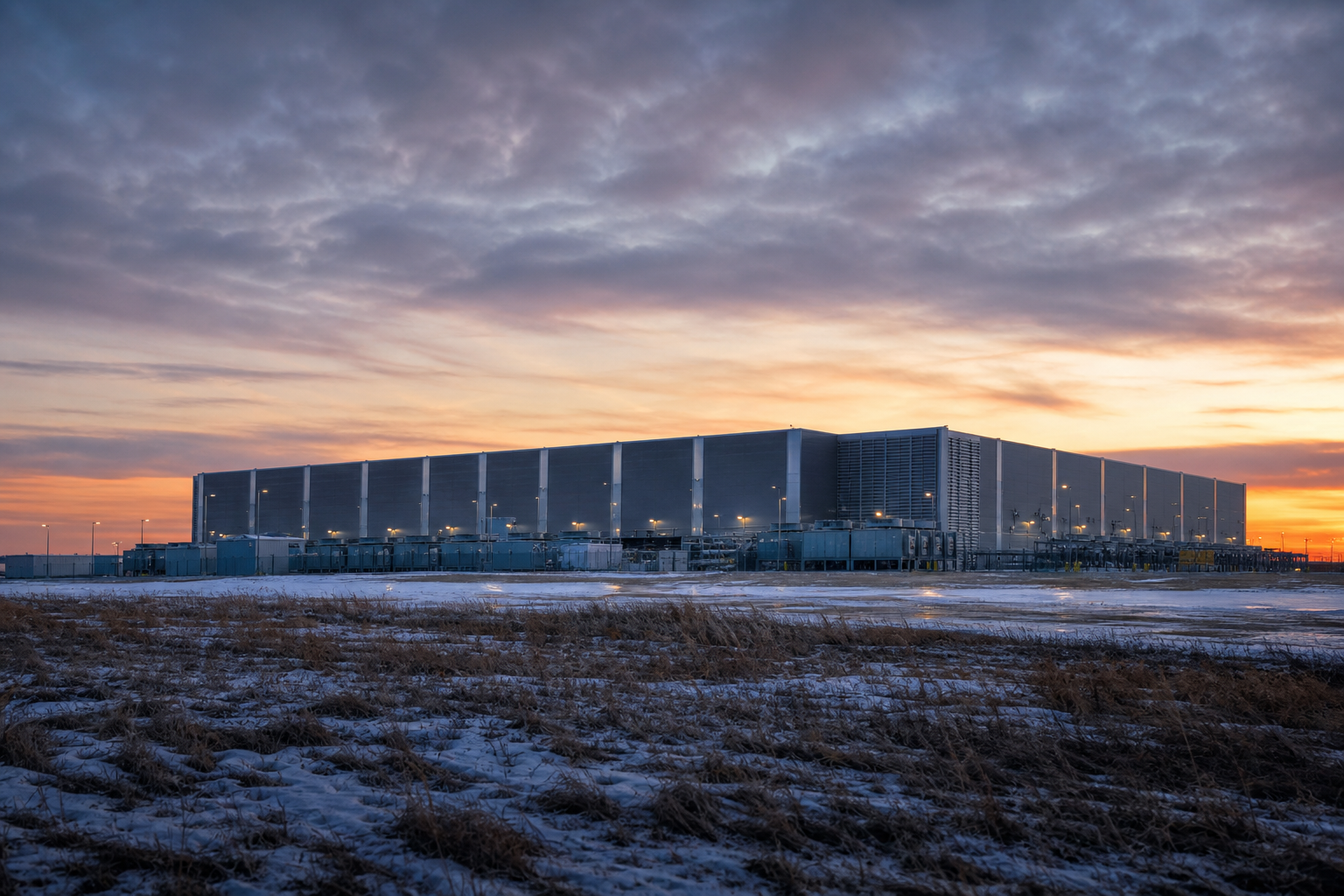
Meta has announced plans to build its first Canadian data center in central Alberta, a massive infrastructure project aimed at supporting the company's aggressive pivot toward artificial intelligence. The facility will house the heavy-duty computing hardware necessary for training and deploying Meta’s next generation of AI models and metaverse applications. This move is significant as it signals the industrialization of AI, where physical land, energy access, and ambient cooling become primary competitive advantages. Alberta was chosen for its energy infrastructure and favorable climate, which helps reduce cooling costs for heat-intensive server farms. While the project promises economic growth and diversification for the province, it raises questions about long-term energy consumption and the environmental impact on the local grid. The development marks a strategic expansion of Meta's global compute footprint, de-risking its operations and positioning Canada as a new hub in the global AI hardware race.
Opening Insight
The global race for artificial intelligence supremacy has moved beyond the silicon labs of Silicon Valley and into the physical geography of the north. Meta’s announcement of its first Canadian data center in central Alberta is not merely a regional construction project; it is a tactical deployment of hardware in the era of generative AI.
As large language models grow exponentially in size, the constraints on their development have shifted from software innovation to raw physical requirements: land, power, and cooling. Alberta, traditionally known for its energy exports, is now positioning itself as a critical node in the planetary compute grid.
This move underscores a fundamental shift in the tech industry’s blueprint. We are witnessing the industrialization of intelligence. Data centers are the new refineries, and the "crude" being processed is no longer oil, but the staggering volumes of data required to train the next generation of Llama models and the metaverse infrastructure Meta continues to pursue.
What Actually Happened
Meta has officially committed to building a massive data center facility in central Alberta, marking the company’s first significant infrastructure footprint in Canada. While Meta operates a vast network of data centers across the United States, Europe, and Asia, this Canadian expansion signals a strategic diversification of its physical assets.
The facility is designed specifically to bolster Meta’s "AI-first" pivot. Unlike traditional data centers meant for simple server hosting or content delivery, this site is intended to house the specialized hardware—thousands of high-end GPUs—required for training and deploying artificial intelligence models at scale.
Central Alberta was selected for a combination of factors that have become the primary checklist for Big Tech infrastructure: availability of land, a stable regulatory environment, and, crucially, access to energy infrastructure. The project is expected to involve significant capital expenditure, contributing to the local economy through construction jobs and long-term operational roles. While the specific wattage and square footage are often kept under tight wraps for competitive reasons, the project is characterized as a "massive" investment consistent with Meta’s multi-billion dollar annual spend on infrastructure.
Why It Matters Right Now
The timing of this announcement coincides with a global "compute crunch." Companies like Meta, Google, and Microsoft are in a desperate scramble to secure the physical capacity needed to keep pace with the hardware demands of AI. Every week of delay in building infrastructure is a week lost in the training cycle of the next state-of-the-art model.
For Canada, and Alberta specifically, this represents a major win in the quest to diversify from a resource-based economy to a knowledge-and-tech-based one. However, it also places new pressures on the local power grid. AI data centers are notoriously energy-intensive, often consuming as much electricity as a small city.
This investment also highlights the geographical "de-risking" of AI development. By spreading its compute capacity across different national borders, Meta hedges against potential regulatory shifts in the US and taps into different energy markets. It also brings the compute closer to a significant user base, reducing latency for AI-driven services across North America.
Wider Context
Meta’s move into Alberta is part of a broader trend where tech giants are scouring the globe for "cool and cheap" locations. The northern climate of Alberta offers a natural advantage: ambient cooling. Data centers generate immense heat; in colder climates, companies can use outside air to cool their servers, significantly reducing the energy required for mechanical refrigeration.
Furthermore, this expansion reflects Meta’s internal shift. Mark Zuckerberg has been vocal about the company’s transition from a social media firm to an AI and metaverse company. To achieve this, Meta has been amassing one of the world’s largest stockpiles of NVIDIA H100 chips. Those chips need a home, and the existing infrastructure in places like Prineville, Oregon, or Luleå, Sweden, is nearing capacity.
This project also places Alberta in direct competition with other emerging tech hubs. It signals to the market that the province is open for "high-density compute," a signal that could attract other players in the AI ecosystem, from chip manufacturers to specialized AI startups.
Expert-Level Commentary
The decision to build in Alberta is a masterclass in infrastructure logistics. Analysts note that Alberta’s deregulated electricity market provides a unique environment for large-scale industrial consumers to negotiate power purchase agreements. For a company like Meta, the ability to secure long-term energy costs is just as important as the speed of construction.
However, there is an underlying tension regarding the "green-ness" of such projects. Alberta’s grid still relies heavily on natural gas. While Meta has committed to reaching net-zero emissions across its value chain, the sheer scale of a new data center makes those goals harder to hit unless accompanied by massive investments in renewable energy offsets within the same province.
From a geopolitical perspective, placing a core AI facility in Canada is a safe bet. Canada shares many regulatory frameworks with the US but offers a distinct political landscape. As the US debates AI safety and regulation, having significant infrastructure in a friendly, stable neighbor provides Meta with operational flexibility.
Forward Look
Looking ahead, we should expect this to be the first of several such investments in the region. Once the initial "anchor" facility is established, the surrounding infrastructure—fiber optic cables, power substations, and a specialized workforce—makes it easier for subsequent phases or for other tech companies to follow suit.
We are likely to see a "race to the north" as other hyperscalers look at Alberta and similar regions. The limiting factor will no longer be capital, but the capacity of the electrical grid to support these digital leviathans. If Alberta can successfully integrate this demand without spiking costs for residential consumers, it could become the "Compute Capital" of the north.
For Meta, the Alberta site will eventually come online to help train Llama 4 or Llama 5. The success of this facility will be measured not just in uptime, but in its contribution to the speed at which Meta can iterate its AI models.
Closing Insight
The arrival of Meta in Alberta is a physical manifestation of a digital revolution. It proves that AI is not a "cloud" existing in the abstract; it is a heavy industry that requires steel, concrete, and vast amounts of electricity.
As Meta breaks ground in the Canadian prairies, the company is doing more than expanding its network. It is staking a claim in the physical landscape, ensuring that the infrastructure of the future is as robust as the algorithms it supports. The transformation of Alberta from an oil province to a compute province may well be the defining economic story of the decade for the region. The machines are coming, and they need a place to stay cool.